Showing posts with label star anise. Show all posts

Thursday, December 19, 2013

Wasabi Deviled Eggs with Sriracha

Deviled eggs are a timeless tradition of delectable snacking that lends itself well to pretty much any party or potluck in any season. These deviled eggs are no exception, and were added to our Holiday Party line up. They are salty, spicy, and have a subtle hint of star anise that makes for a more Eastern take of a Southern classic. I love deviled eggs in pretty much every available format, but the only thing better than one kind of deviled egg is SEVERAL kinds of deviled eggs.

The original recipe (available at the Food and Wine website), uses scallions in the marinade, but we were fresh out of scallions when we first made these and substituted a combination of onions and garlic in its place, as this is essentially a marinade so presentation really isn't an issue. It worked wonderfully. The main flavors from the marinade are fresh ginger, soy, sake, and star anise and the onion is more of a background note. And given we are more likely to have an onion on hand than to have a bunch of scallions, it's been a useful substitute.
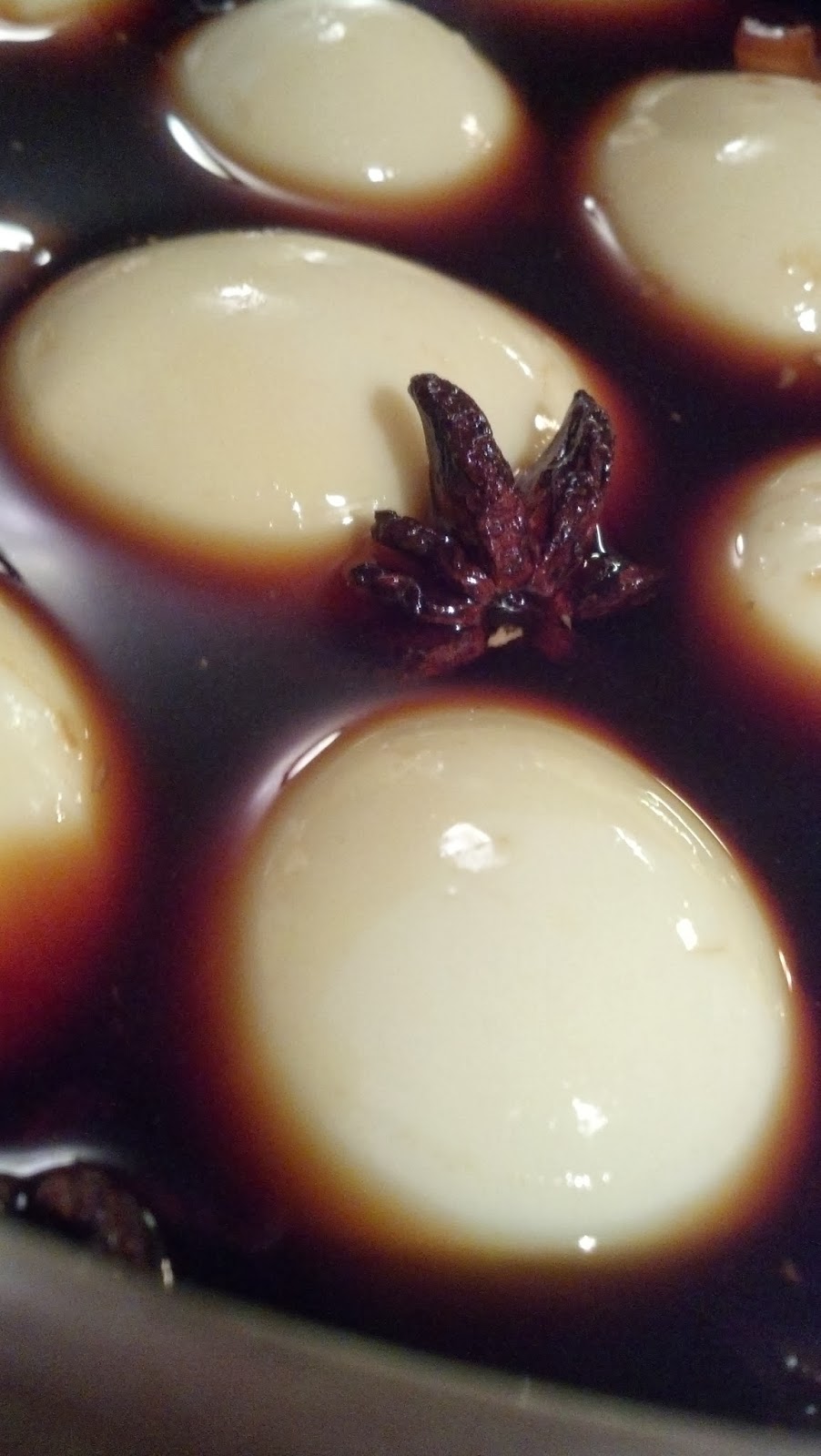
The star of this show is the wasabi and sriracha filling, which takes this from just being salty to packing a kick at the end of each bite that makes people eat them before I am able to take the "finished" photo of what they look like, which gives you a sense of their popularity. If you want a quick and dirty version that doesn't involve a bunch of star anise and hours of marinating, you can just make the filling and skip the marinade. Your eggs won't get a cool tint and will not have quite the complexity, but the filling is pretty delicious on its own. Even with the marinade, this still qualifies as a pretty easy recipe. If you want to throw some extra eggs in there, go ahead. We've squeezed in 15 eggs into the marinade without increasing the amounts of the marinade (this might require more stirring for even coating). Above that I would recommend making some extra marinade.
 

Wasabi Deviled Eggs with Sriracha

Makes 24 eggs

Ingredients

1/4 cup sugar
1/4 cup coarsely grated peeled fresh ginger
1/2 cup sake
1 cup water
2 cups soy sauce
10 star anise pods
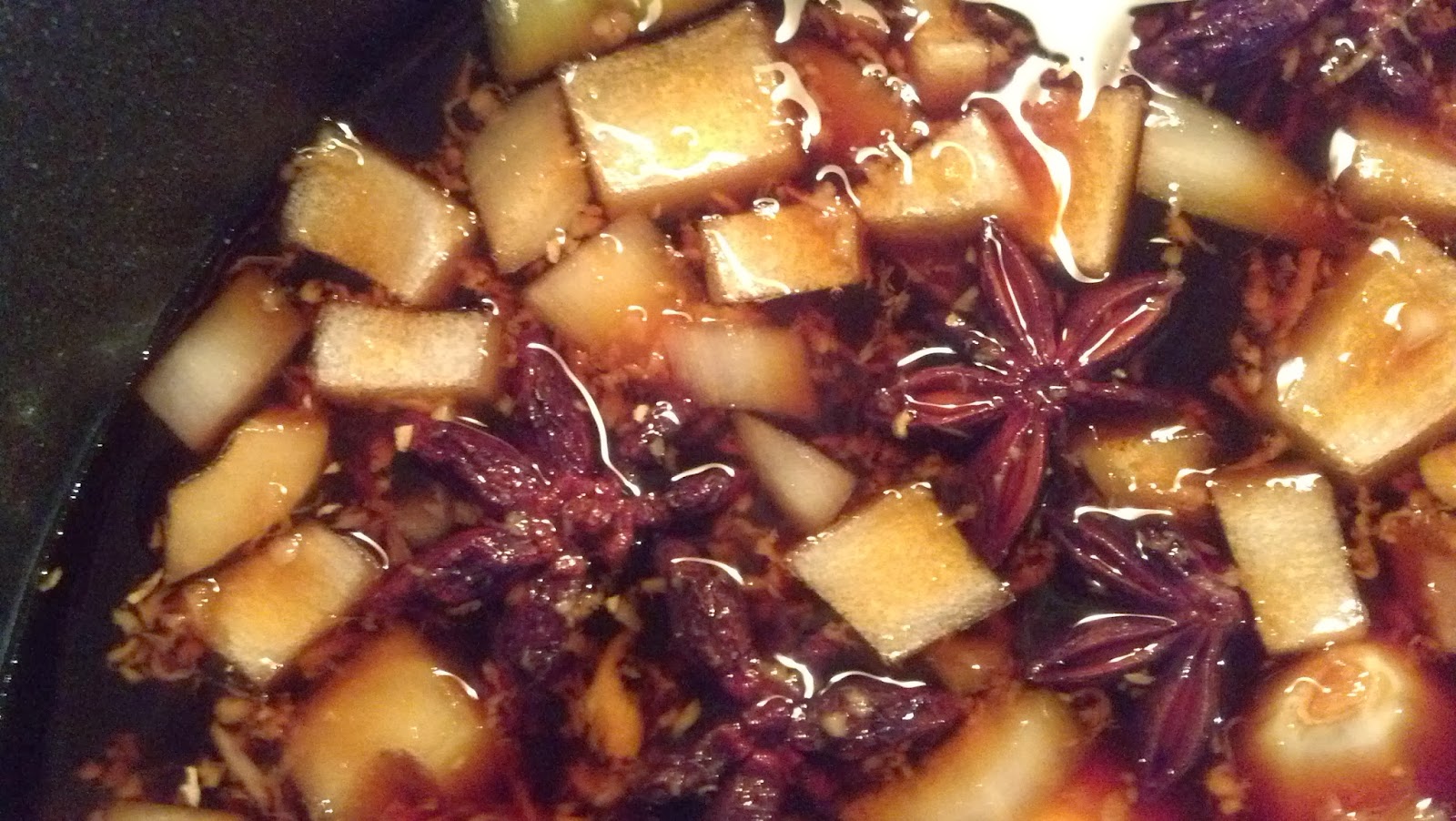

1 medium yellow onion, chopped (or 1/2 cup of chopped scallions)
6 cloves garlic, peeled
1 dozen large eggs 
1 tablespoon Sriracha  
1/4 cup plus 1 tablespoon mayonnaise
1/4 cup snipped chives
2 1/2 teaspoons wasabi paste 
Chinese five-spice powder 


Instructions 

  1. In a medium saucepan, combine the water, soy sauce with the sake, star anise, onion (or scallions if using), garlic, sugar and grated ginger.
  2. Bring soy mixture to a boil. Transfer the mixture to a heatproof medium bowl and let cool completely. 
  3. Meanwhile, in a large saucepan, cover the eggs with cold water and bring to a boil. Boil for one minute, then cover the saucepan, remove from heat, and let stand 10 minutes until hard boiled.
  4. Drain the water from the large saucepan. Cool the eggs slightly under cold running water to stop the cooking process, then peel them under cold running water. 
  5. Add the eggs to the completely cooled soy mixture. Cover with plastic wrap and refrigerate the eggs for at least 4 hours, stirring once in awhile to ensure that all the eggs are fully immersed in the soy mixture and will color evenly.
  6. Drain the eggs and rinse lightly to remove any bits of scallion or ginger; pat dry. The outside of the eggs will become a tannish brown color.
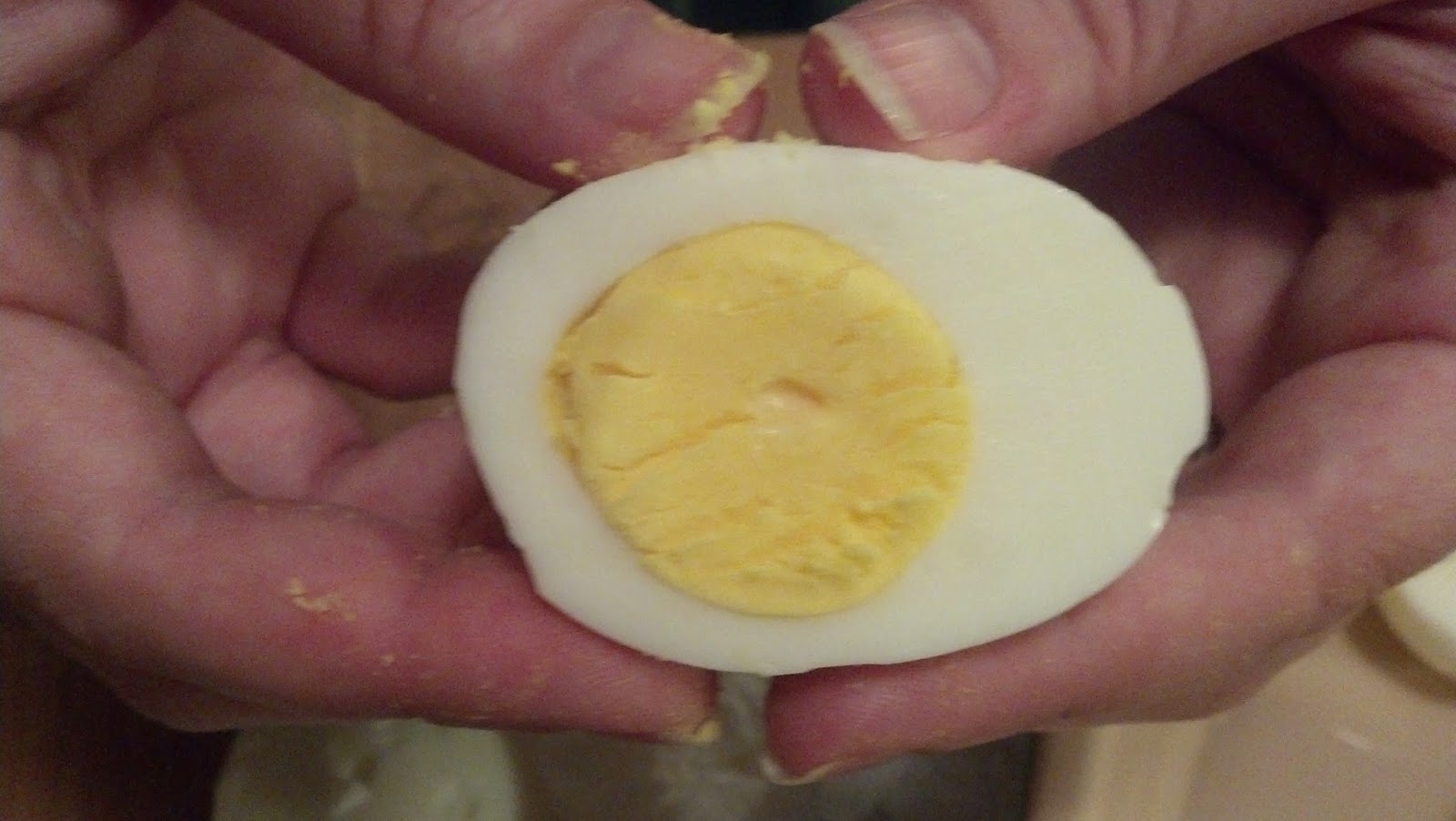
  7. Using a slightly moistened thin, sharp knife (non-serrated), cut the eggs in half lengthwise. Yolks should be bright yellow, cooked all the way through, and the knife should cut cleanly through the yolk.
  8. Gently pry the egg yolks into a medium bowl without breaking the cooked white. Leave the whites aside and mash yolks with a fork or potato masher until the mixture is as free of lumps as possible. If some remain, they will be taken care of during the piping process.
  9. Stir the mayonnaise, Sriracha, wasabi and 3 tablespoons of the snipped chives into the mashed yolks until fully combined.
  10. Transfer the mixture to a pastry bag fitted with a star or plain tip. Set the egg whites on a serving platter and pipe in the filling. If you don't have a pastry bag, cut off the corner of a plastic Ziploc bag, or just use a spoon for a slightly more rustic but equally delicious look. At this point, if you are making these ahead of time, you can stop here and store the eggs in a fridge overnight until ready to serve.
  11. Right before serving, sprinkle a pinch of Chinese five-spice powder on each of the deviled eggs then top with the remaining chive snips or thinly sliced scallions if wanted. 
Friday, February 18, 2011

Short Ribs Braised In Syrah

We adapted this recipe from Michel Richard’s Happy in the Kitchen. Like many of Richard’s recipes, making these short ribs is a long and involved process (it takes two days and requires 20 different ingredients). The techniques employed and the equipment required, however, are both simple and familiar. Just remember to set aside plenty of time, and this recipe can be a lot of fun, and very rewarding.

What really sets this recipe apart from your average short rib is the quality of the sauce. Smooth and rich, with complex flavor, the sauce is a thing of beauty. Syrah, which forms the base of the sauce, has plenty of depth and power to match up against the richness of the short rib. The star anise we include in the bouquet garni helps to highlight the sweet elements in the sauce. Finally, port and honey are added to the sauce at end to temper any harshness in the wine.

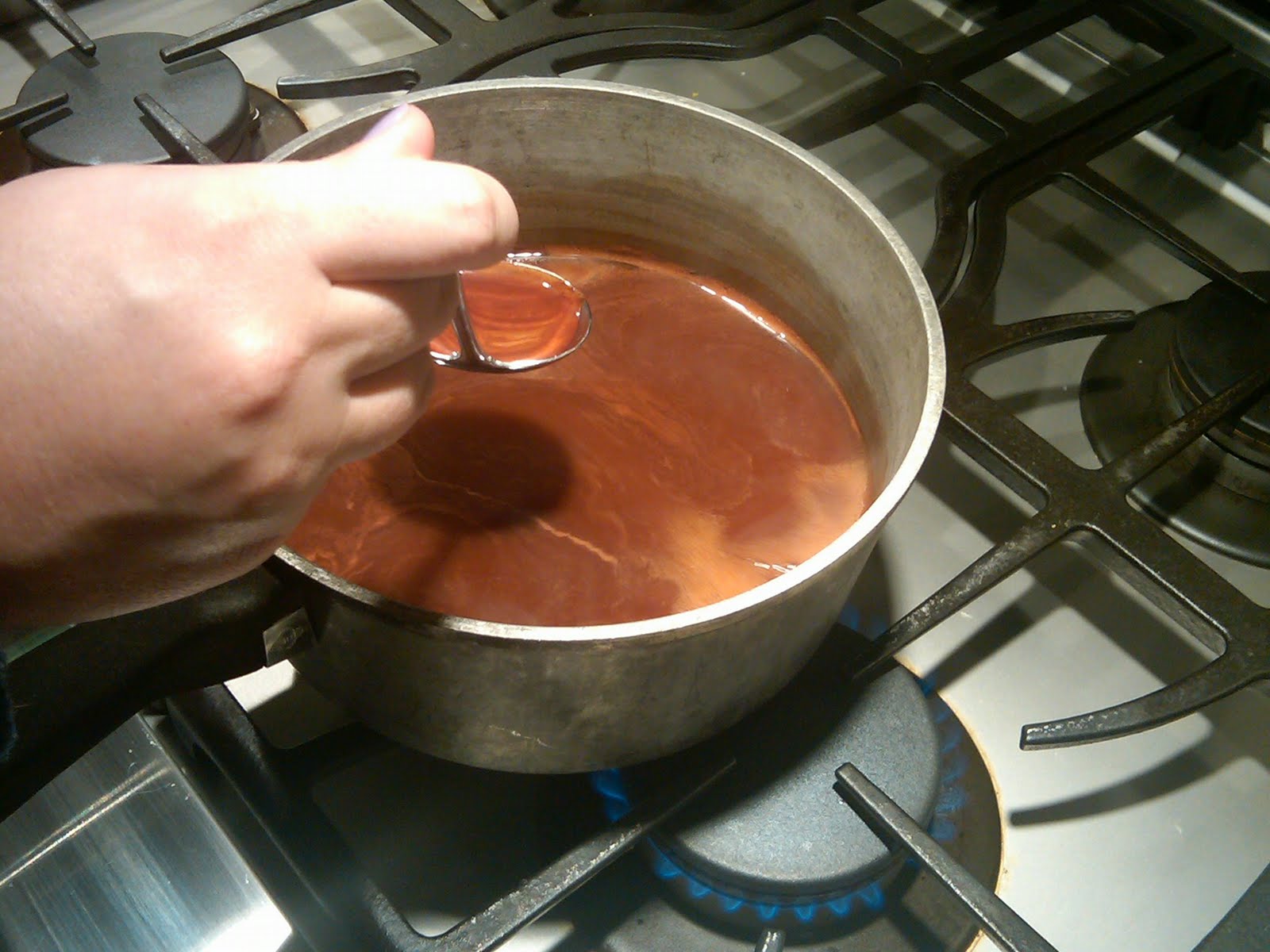
Skimming fat off reducing sauce
Just as important as what goes into the sauce, however, is what gets taken out of it – the fat. After refrigerating the short ribs overnight, most of the fat in the sauce will have risen to the surface and formed a hard layer. Make sure to remove as much of the fat from the surface of the sauce at this stage as you can. Be patient. After straining the solids out of the sauce, we bring it to a simmer and then move the saucepan to one side of the burner. Boiling the liquid in only one side of the pan pushes the foam that rises to the top to the opposite side, making it easier to skim off. This is a neat trick to use whenever you need to skim fat off the surface of a sauce as it reduces.

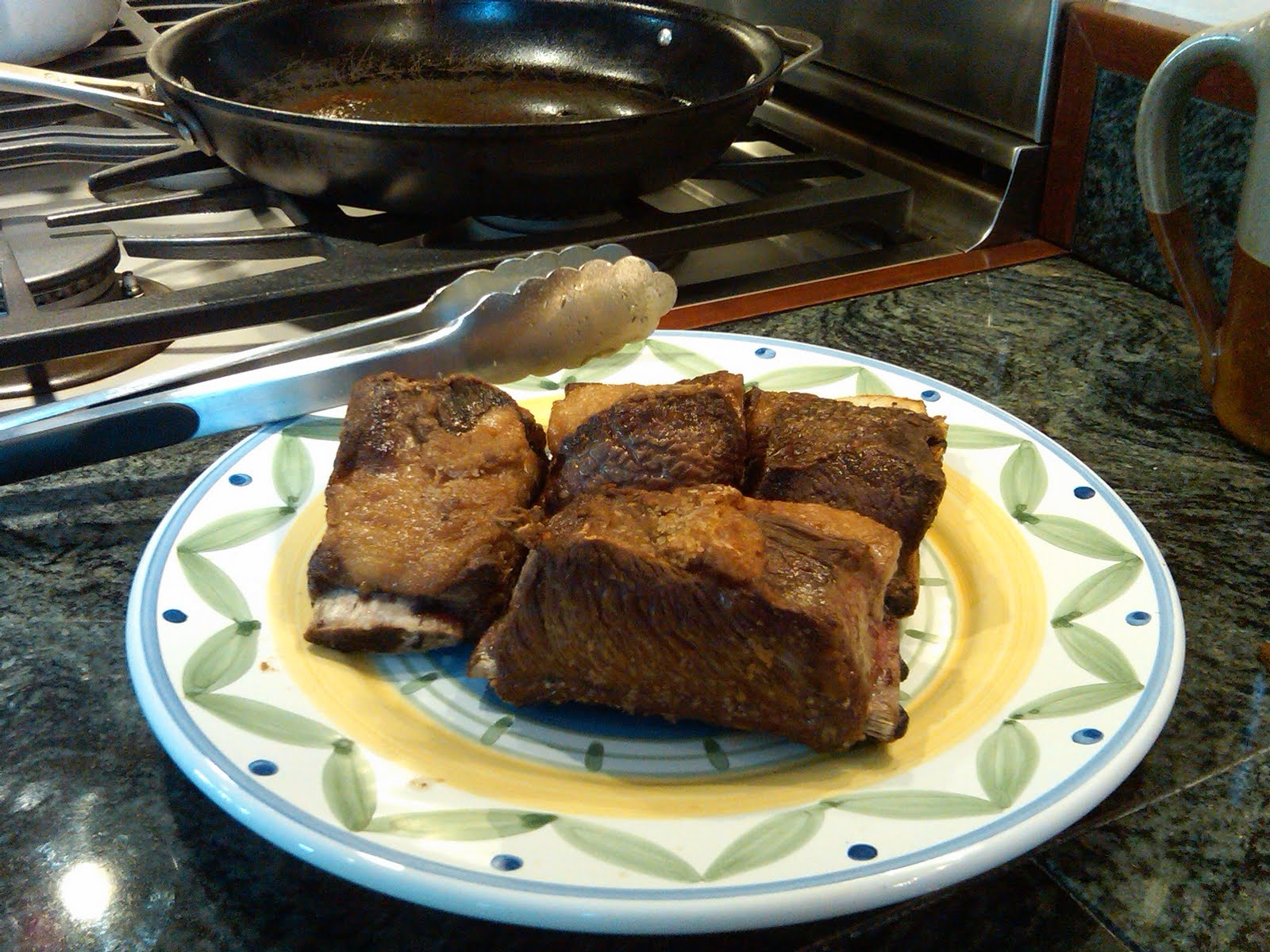
This recipe calls for browning the short ribs in clarified butter. Clarified butter is simply regular butter with the milk solids removed – and is terrific for browning meats. When heated to higher temperatures, the milk solids in whole butter can burn. By browning the meat in clarified butter, we can achieve the same deep brown crust that I associate with meats browned in butter, without all the smoke (good news for those of us with sensitive smoke detectors). I’ve included instructions on how to make clarified butter in the recipe.

Short Ribs Braised in Syrah

Ingredients

8 tablespoons (1 stick) unsalted butter
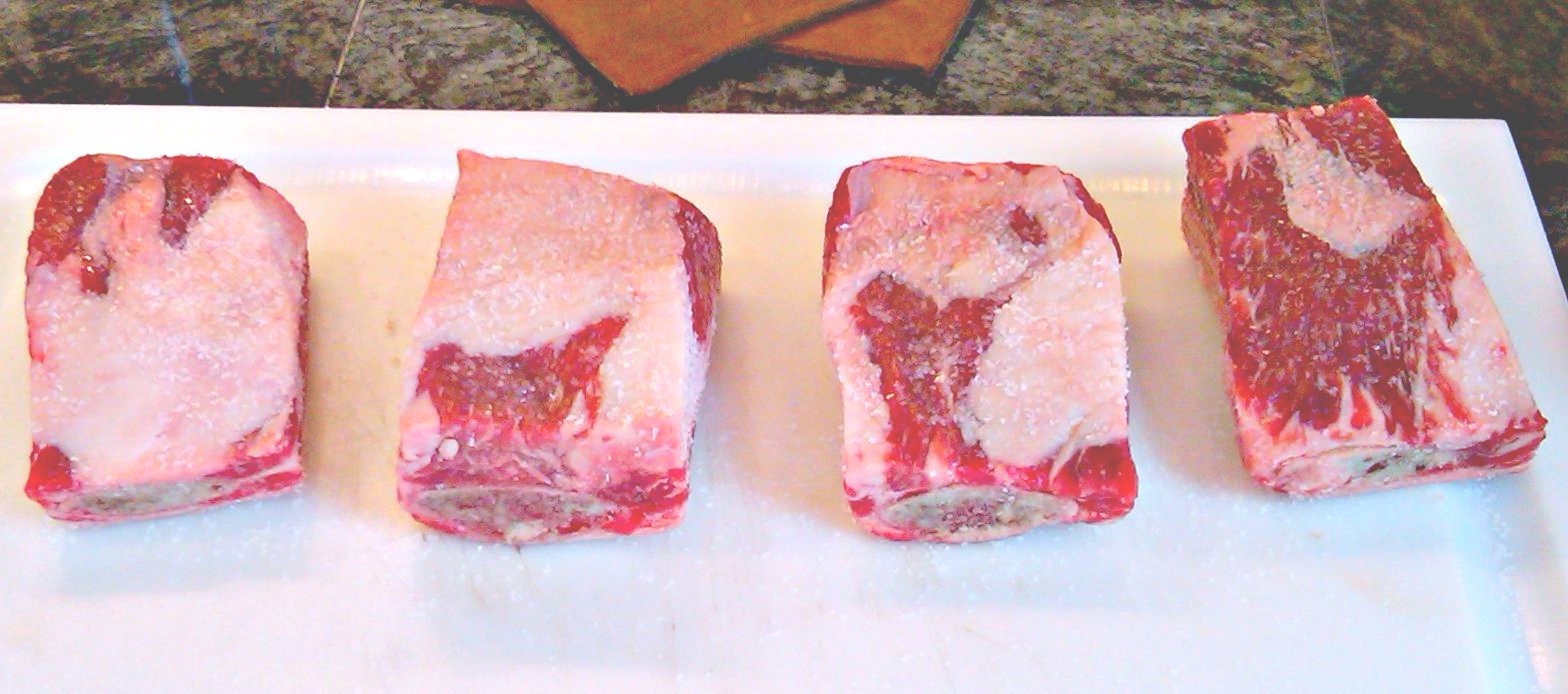
4 beef short ribs, about 7 inches long and 2 inches wide
Kosher salt
1 tablespoon olive oil
6 ounces slab bacon, cut into ½ inch pieces
1 cup diced leeks (white and light green parts)
2 cups diced yellow onions
1 cups diced carrots
6 garlic cloves, peeled
1 bottle Syrah
2 cups chicken stock
1 tablespoon black peppercorns
2 star anise
2 6-inch pieces leek green
2 bay leaves
3 sprigs thyme
2 sprigs rosemary
1 cup ruby port
1/8 cup honey
½ cup tomato paste
Freshly ground black pepper


Instructions

  1. Melt the butter in a small saucepan over low heat, without stirring. Once the butter has completely melted, skim off the foam that has risen to the surface and discard. Carefully pour off the clear yellow liquid underneath. This is the clarified butter. Discard the white milky layer left in the bottom of the pan.
  2. Position oven rack in lower middle position, and preheat oven to 275°F. Dry the short ribs with paper towels, season on all sides with Kosher salt, and let sit for about 10 minutes.
  3. Heat 2 tablespoons of the clarified butter in a large skillet over medium-high heat. Arrange as many short ribs as can fit in the skillet without touching and cook, turning occasionally, until evenly browned on all sides, about 10 minutes. Remove browned short ribs from skillet and repeat with remaining short ribs, adding additional butter to the pan as necessary.
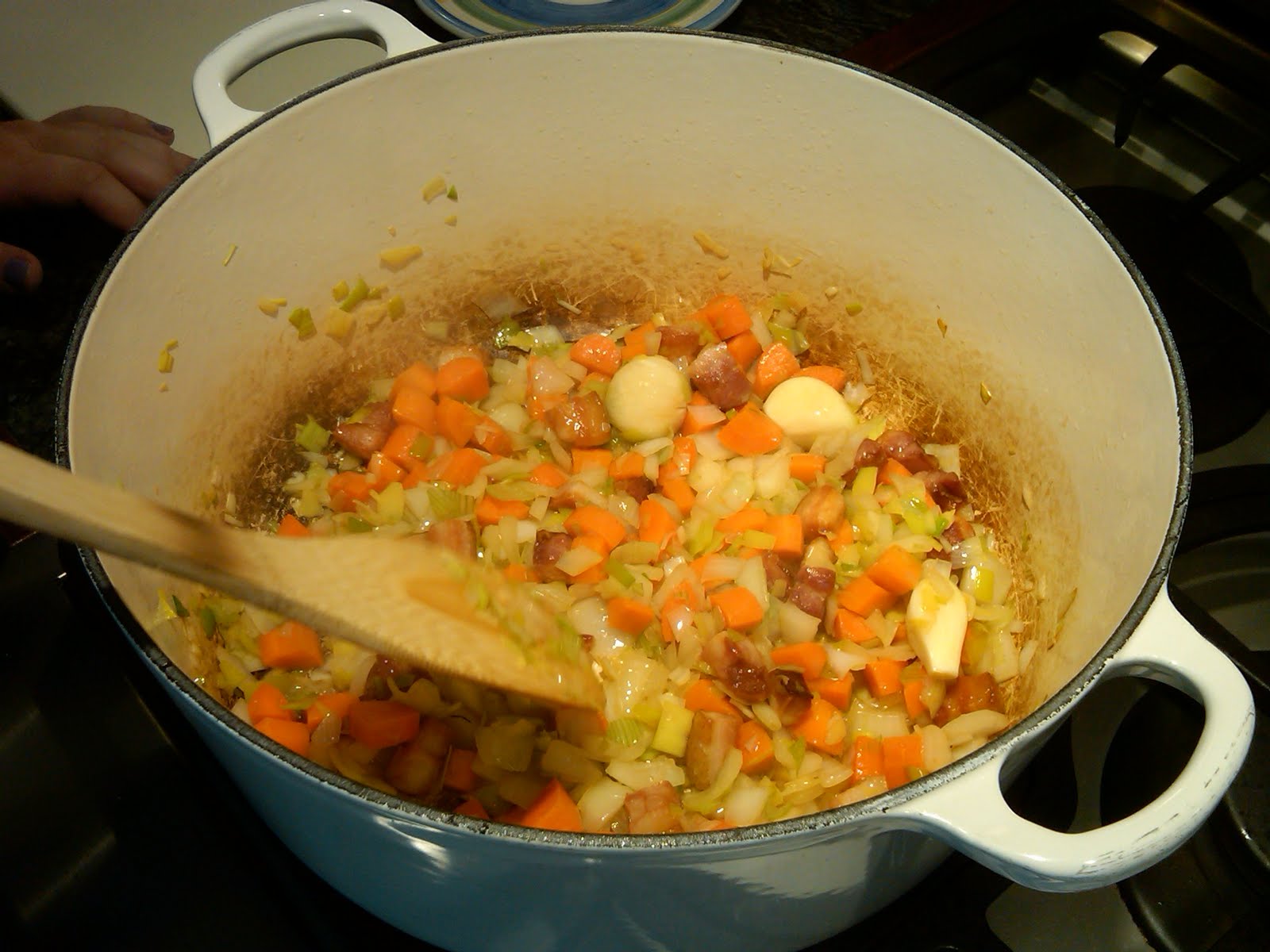
  4. Heat olive oil in large Dutch oven over medium heat until shimmering. Add the bacon and stir for about 10 minutes or until it has rendered its fat. Stir in the leeks, onions, carrots, and garlic and sauté for 10 minutes, stirring frequently, until the vegetables are wilted and lightly caramelized.
  5. Add about 1 cup of the wine and, using wooden spoon, scrape up any browned bits from the bottom of the pot. Arrange the short ribs over the vegetables, layering them as necessary. Reduce heat to medium-low, and add the remaining red wine and chicken stock.
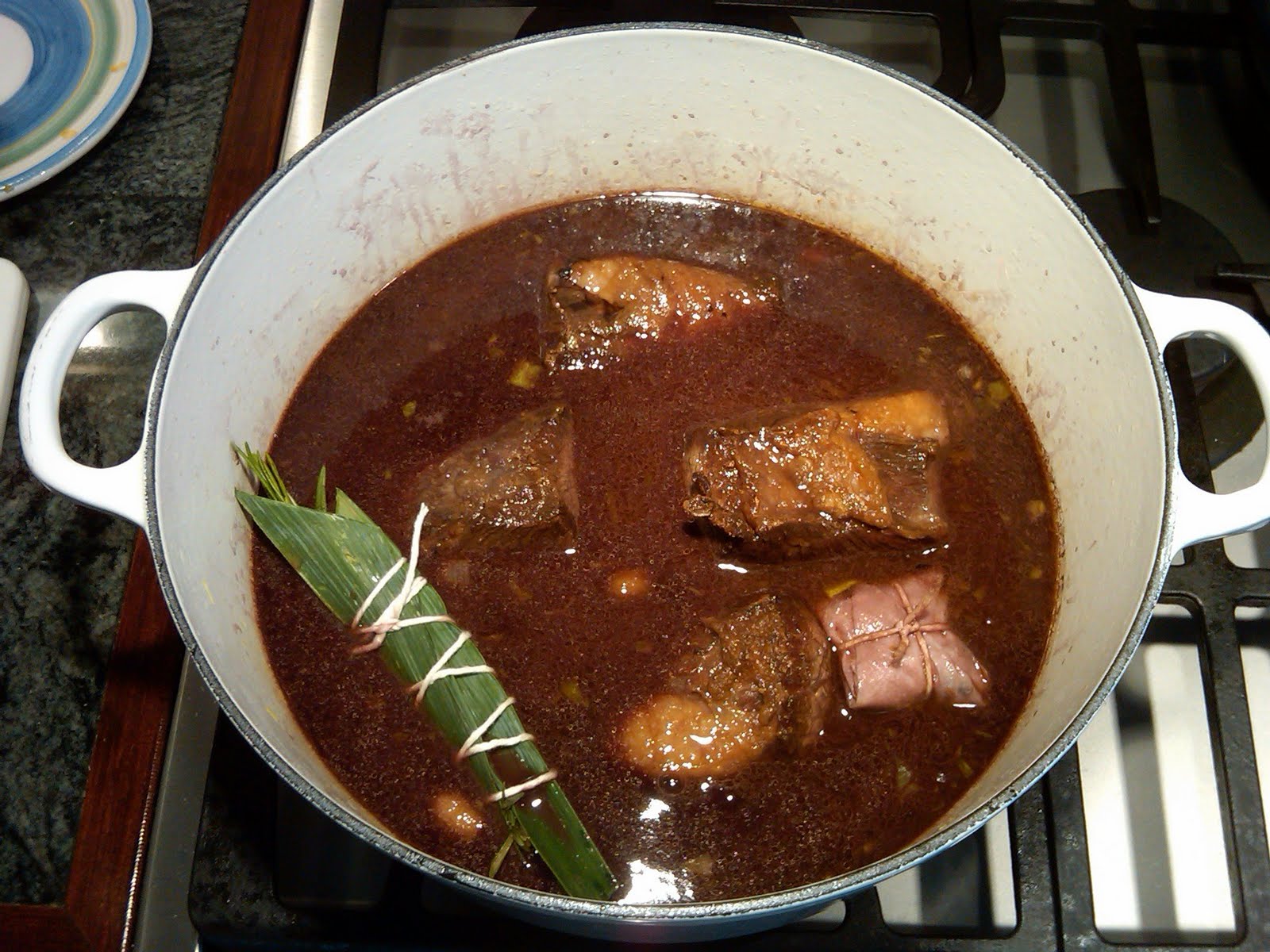
  6. Place the peppercorns and star anise in a small piece of cheesecloth or a small coffee filter, and tie with twine to form a bundle. Lay a piece of leek green flat on the work surface. Place the bay leaves, thyme, and rosemary in the center and cover with the remaining piece of leek. Tie together with twine. (See photos.)
  7. Bring the liquid to a boil, skimming off any fat and scum that rises to the surface. Cover the pot and place in the oven for about 3 hours. When the meat is done, it should be fork-tender and should separate easily from the bone.
  8. Remove the pot from the oven and let cool to room temperature, then refrigerate overnight in the pot.
  9. The next day, remove the pot from the refrigerator and preheat oven to 325°F. Remove and discard all the hardened fat that has risen to the surface. If the liquid has gelled and the meat cannot be removed easily, heat the pot over medium meat. As the liquid heats, remove the meat and bones from the pot before the meat softens. Then continue to heat he liquid until simmering.
  10. Meanwhile, place the meat on a cutting board. Cut away and discard the bones and any fat and sinew. Place the meat in a baking dish or small roasting pan.
  11. Strain the cooking liquid through a fine-mesh strainer into a large saucepan and discard the solids. Place over medium heat, add the port, honey and tomato paste, and bring to a boil. Move the pan to one side of the burner and reduce the liquid to about 4 cups, skimming off the foam that rises to the top. When reduced, season the sauce with salt and pepper to taste and pour the sauce over the meat. At this point, the meat can be covered and refrigerated for up to a day.
  12. Place the baking dish in the oven and bake for 30 minutes. If the sauce does not cover the meat, baste the meat every 5 minutes.
  13. Place the meat on serving plates and spoon the sauce over the top.